
Building Your Emergency Savings Fund | Free, Self-Paced Course
A short, practical course that helps you set a savings goal, pick a safe place to keep it, and build a simple system to grow it—one step at a time.
Emergencies don’t wait—your plan shouldn’t either.
An emergency savings fund is a dedicated cash reserve for unexpected costs like car repairs, medical bills, home fixes, or a sudden loss of income.
Many people aim to build toward 3–6 months of essential expenses, often starting with a smaller first milestone (like $1,000) to get momentum.
And the need is real: the Federal Reserve reports that 37% of adults would not cover a $400 unexpected expense fully with cash (or its equivalent), and only 55% say they have rainy-day funds to cover three months of expenses.
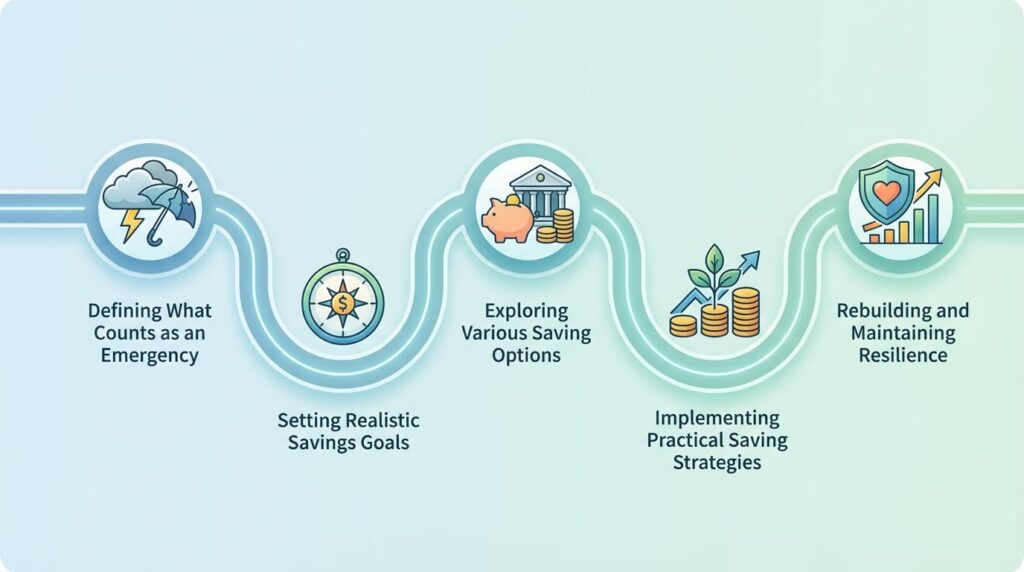
What you’ll do in this course
Many guidelines suggest building toward 3–6 months of essential expenses, often starting with an initial milestone like $1,000 to create breathing room.
In general, it’s kept “liquid”—easy to access quickly—often in a savings-type account. The right choice balances accessibility and safety.
No. This course is educational and provides general information, not personalized recommendations.
Unplanned expenses or income disruptions—like repairs, medical bills, or job loss—are common examples.
*Educational content only. Consider speaking with a qualified professional for advice based on your personal situation.