
Credit Score & Credit Reports: How to Unlock Financial Potential
This course will help you understand how your score and reports work. It will also show why they matter to lenders, and how you can use that knowledge to unlock financial potential.
Why Does Your Score Matter?
At the end of the day, your score is more than just a number. It’s a key factor lenders use to evaluate your financial reliability. This number has the potential to influence loan approvals, interest rates, rental applications, credit card offers, and even insurance premiums. Therefore, a higher one can mean lower borrowing costs and better financial opportunities over time.
All in all, understanding how your score & credit report work gives you the power to make smarter financial decisions and position yourself for long-term success. In the end, this course will give you a better understanding of why your score is so important.
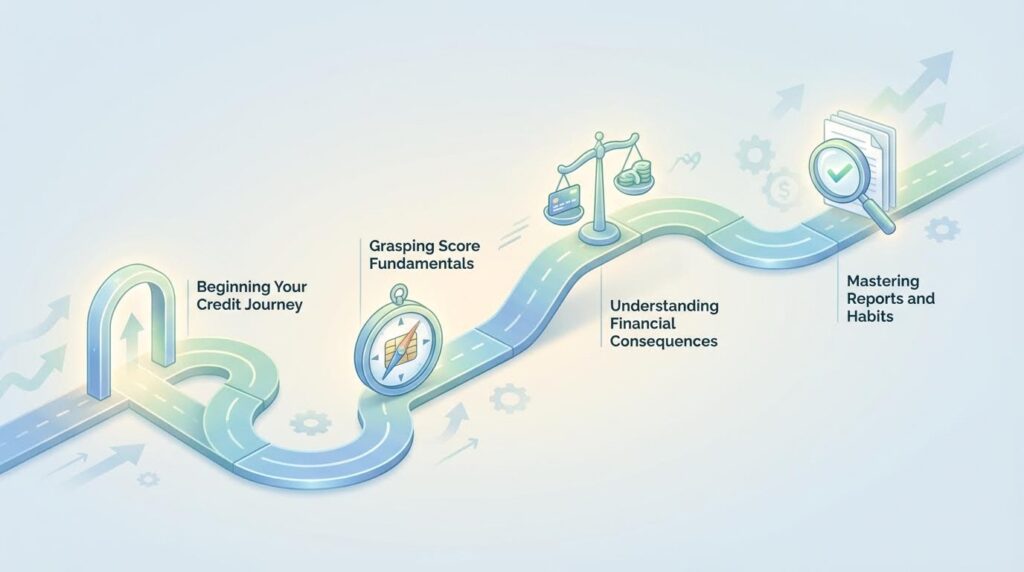
What You’ll Learn in This Course
This is a three-digit number that represents your creditworthiness. Lenders use it to evaluate how likely you are to repay borrowed money. Your score is based on information in your credit report, including payment history, balances, and account activity.
A credit report is a detailed record of your credit history, including accounts, payment history, balances, and inquiries. A score is a number calculated from that report to summarize your overall credit risk.
Most credit scoring models consider five main factors: payment history, credit utilization, length of credit history, credit mix, and new credit inquiries. Overall, payment history and credit utilization typically have the biggest impact.
While scoring ranges vary, a score in the mid-700s or higher is generally considered good to excellent. Meanwhile, higher scores typically qualify for better loan terms and lower interest rates.
*Educational content only. Consider speaking with a qualified professional for advice based on your personal situation.