Building Your Emergency Saving Fund
Learn how to set aside money for unexpected expenses, so you’re prepared when life happens. Discover strategies to reduce financial stress and gain peace of mind by building a solid emergency savings fund, even with a tight budget. You’ll learn what truly counts as an emergency, how much to save, and the best places to keep your money, empowering you to handle life’s surprises without debt.

Why should I save for emergencies?
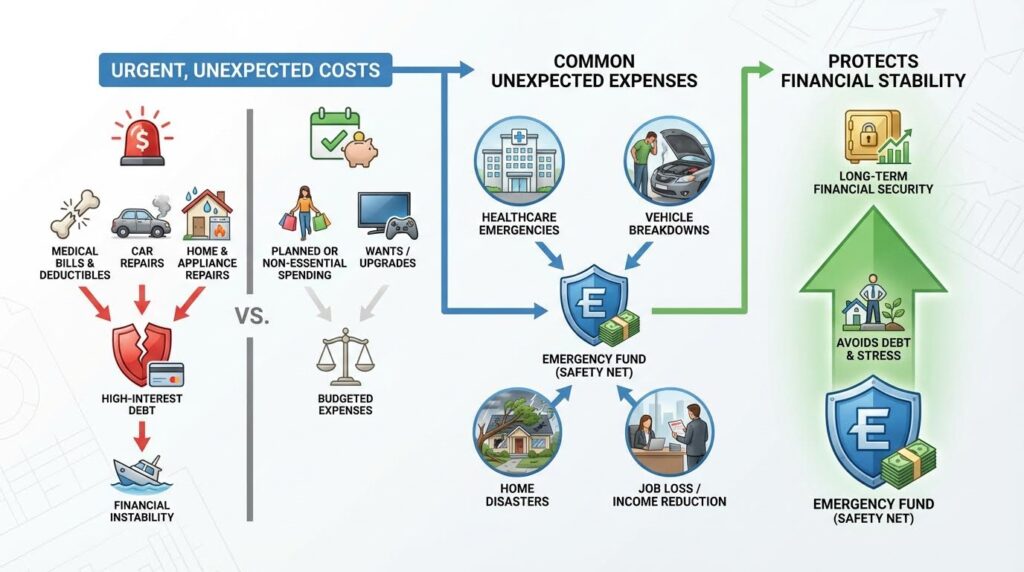
Unexpected expenses happen more often than we expect. Because these costs don’t occur on a set schedule, they’re easy to overlook when planning a budget. Emergency savings help you prepare for these situations.
Having money set aside for emergencies gives you options. Instead of relying on credit cards or loans, you can use your savings to cover unexpected expenses.
What Counts as an Emergency?
An emergency is an unexpected, necessary expense that you didn’t plan for and can’t delay. It’s about things you truly need, not wants. Ask yourself: Is this urgent, necessary, and unexpected? If it fits these criteria, it’s likely an emergency.
Yes, car repairs needed to get to work count as an emergency. If your transportation is essential for your income, fixing it unexpectedly falls under this category. This ensures you can maintain your livelihood and continue to earn money.
Absolutely, medical or dental bills that are unexpected are emergencies. Health issues often arise without warning and can be costly, making them a prime reason to tap into your emergency savings. Your well-being is a necessary expense.
Emergency home repairs, like a burst pipe or a broken furnace in winter, are definitely emergencies. These are unforeseen issues that can impact your safety, health, and ability to live comfortably in your home. They are necessary and often urgent.
Yes, a temporary loss of income, such as from a job layoff or illness, is a significant emergency. Your emergency fund can bridge the gap during this period, allowing you to cover essential expenses until your income stabilizes again. It protects your ability to meet your basic needs.
No, vacations are not emergencies. While enjoyable, they are planned expenses and not urgent, necessary, or unexpected. You should save for vacations separately, not from your emergency fund. This fund is strictly for life’s curveballs.
No, holiday spending and planned purchases or upgrades are not emergencies. These are anticipated expenses that you can budget for in advance. The emergency fund is designed for unpredictable events, not scheduled indulgences or improvements.
Compare Saving Options:
Checking accounts are designed for your everyday money needs, perfect for paying bills, making purchases, and handling regular expenses. While they offer easy access, which can be convenient, they aren’t typically ideal for long-term savings. Why? Because they usually earn very little to no interest, meaning your money won’t grow over time. Plus, that easy access can sometimes make it tempting to dip into your savings for non-emergencies. Think of it as your spending hub, not your savings vault. While they offer easy access to funds and often low or no monthly fees, the low interest earnings and the temptation to spend make them less suitable for an emergency fund.
Savings accounts are often a smart choice for your emergency fund. They generally offer higher interest rates than checking accounts, helping your money grow a bit, while still giving you access when you truly need it. You might find that withdrawals are limited each month, which can actually be a good thing – it helps discourage frequent spending on non-essentials. This balance of being accessible for emergencies but slightly less convenient for impulse buys makes savings accounts a strong contender for building your financial safety net. They encourage saving rather than spending and provide easy access for genuine emergencies.
Certificates of Deposit (CDs) are designed to hold a fixed amount of money for a set period, like six months or a year. In return for locking up your money, they often offer higher interest rates compared to traditional savings accounts. The catch? If you need to access your money before the CD matures, you’ll likely face penalties for early withdrawal. This makes CDs better suited for savings goals with a known timeline, such as a down payment on a house in two years, rather than for unpredictable emergencies where you need immediate access to your cash. While they offer predictable returns and are low risk, the limited access to funds makes them less flexible for unexpected financial needs.
Prepaid cards let you load a specific amount of money and only spend what’s available on the card. They don’t require a credit check and can help you avoid overspending since you can’t borrow against them. However, they’re generally not the best option for your emergency savings. They are easy to spend from, may come with various fees, and typically don’t offer the same protections or interest-earning opportunities that a dedicated savings account provides. Think of prepaid cards as a tool for managed spending, not a place to grow and secure your emergency fund. They are not designed for long-term savings and often earn no interest.
5 Steps to Save More:

Start Small
It’s easy to feel overwhelmed by the idea of building a large emergency fund, but remember: every journey begins with a single step. Even setting aside a small amount consistently can build momentum and help you see progress, which is incredibly motivating. Don’t underestimate the power of consistent, modest contributions to your peace of mind.

Automate When Possible
One of the easiest ways to ensure your savings grow is to make it happen without thinking about it. Set up automatic transfers from your checking account to your dedicated savings account each payday. This way, your emergency fund builds consistently in the background, reducing the temptation to spend that money elsewhere and increasing your peace of mind.

Use Extra Money Wisely
Unexpected windfalls like tax refunds, work bonuses, or monetary gifts can be powerful tools for jump-starting your emergency fund. Instead of spending these amounts, consider dedicating a portion, or even all of it, to your savings. This can significantly boost your fund quickly, helping you feel more secure and less stressed about the future.

Reduce Small Expenses
Take a close look at your spending habits. You might be surprised how much small, regular expenses add up. Cutting back slightly in a few areas — like that daily coffee or a subscription you rarely use — can free up more money than you think. This liberated cash can then be channeled directly into your emergency savings, reducing your financial stress.

Rebuild After Using It
Life happens, and sometimes you’ll need to use your emergency fund for its intended purpose. That’s perfectly okay! The important thing is that once the immediate crisis has passed, you make a conscious effort to replenish it. Focus on rebuilding your fund over time, ensuring you’re always ready for the next unexpected event and maintaining your peace of mind.